

Magpie Hill Solar Farm
Project Overview |Project Updates | Community & Benefits | Environment & Planning | Resources| Contact Us
Project Status
Development
Indicative Capacity
375 MW solar farm
Up to 3,000 MWh BESS
Local Government Area
Queanbeyan-Palerang Regional Council
Goulburn Mulwaree Council
Location
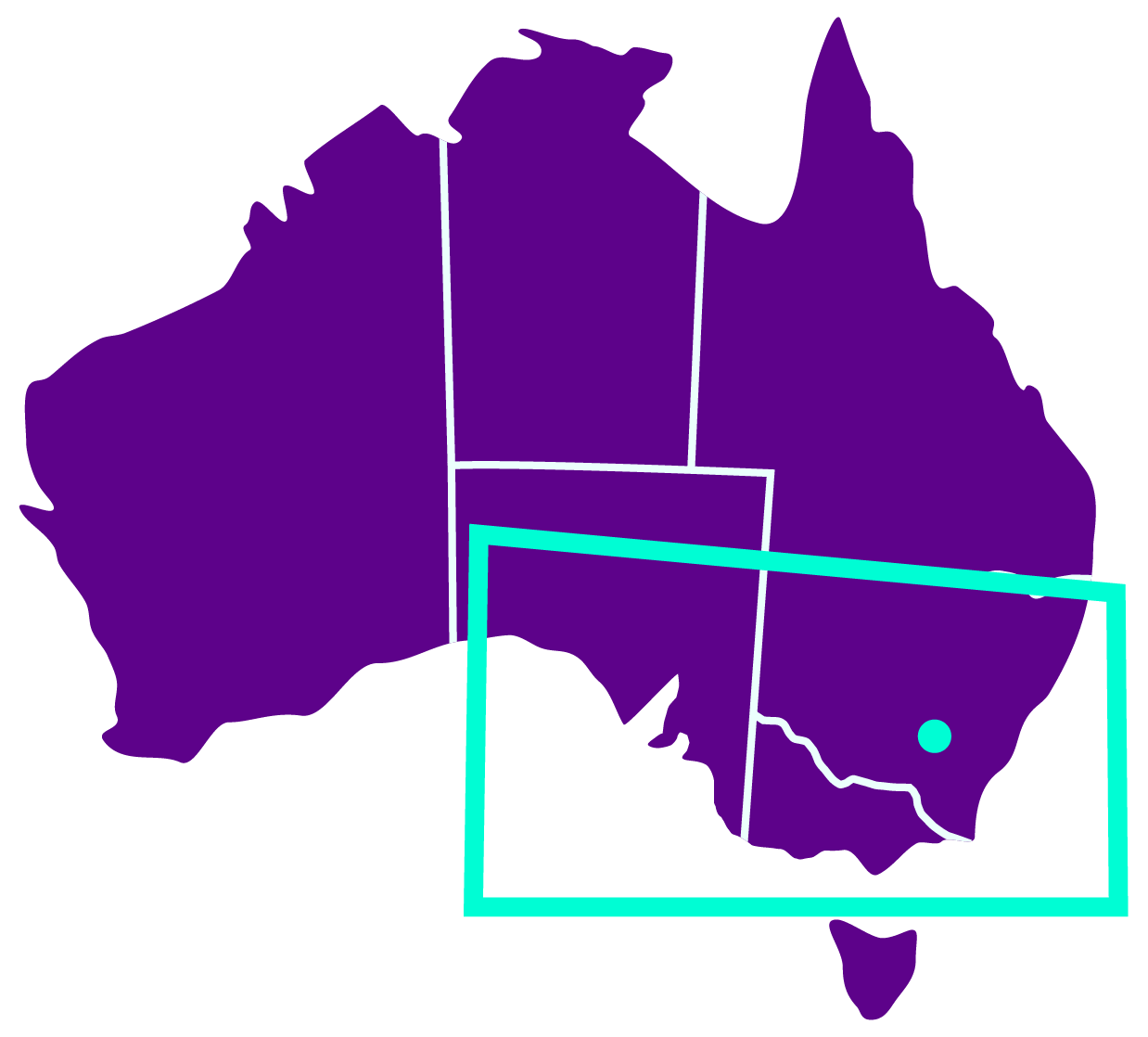
Southern Tablelands, NSW
Mint is proposing to develop the Magpie Hill Solar Farm with a Battery Energy Storage System (BESS) located 6 km south west of Tarago and 17 km north east of Bungendore in the Southern Tablelands region.
We are currently investigating an area of about 735 hectares for the new solar farm. The final footprint of the Project will depend on planning and environment considerations, grid requirements, the selected technologies and feedback from stakeholders and community. The Magpie Hill Solar Farm could have an approximate capacity of 375 megawatts (MW), with an associated 3,000 megawatt hour (MWh) BESS.
The Scoping Report submitted for the Project included a capacity of up to 450 MW and associated 450 MW / 3600 MWh BESS. This capacity was proposed to allow for changes in technology over time (improvements in energy density and efficiency) and different possible configurations. However, following further review of the Project’s design and still allowing for future technology changes, we have revised the expected capacity for the Project to 375 MW with an associated 375MW / 300MWh BESS. This is what will be assessed in the EIS.
Primary access to the site is expected via Bungendore Road, with a secondary access point from Mount Fairy Road near the proposed switchyard and grid connection location.
The proposed Project is strategically located to contribute meaningful new solar generation where the state needs it most, supporting NSW’s transition to clean energy.
A key factor influencing the site’s selection is its close proximity to the existing 330kV overhead transmission line, which allows for efficient grid connection and keeps any new transmission requirements to a minimum.
In addition to solar panels and BESS, the facility will include:
• single-axis trackers
• inverters
• monitoring and control systems
• substation
• switchyard
• underground cable and overhead transmission line
• site access points and tracks.

Solar could power 119,000 homes in the region. When the BESS on site is fully charged a 3,000 MWh BESS has enough energy capacity to supply over 600,000 homes in NSW for 8 hours.

Project Location
Project Updates
The Magpie Hill Solar Farm has reached another important milestone, with the Commonwealth Government determining the Project to be a Controlled Action under the Environment Protection and Biodiversity Conservation Act 1999 (EPBC Act).
A Controlled Action decision does not mean the Project has been approved. Rather, it confirms that the Project will require assessment and approval by the Commonwealth Government before it can proceed. The decision relates to potential impacts on nationally protected environmental matters, including threatened species and ecological communities. Further details on this decision can be found on the EPBC Act Public Portal here.
The Project continues to progress through the New South Wales State Significant Development (SSD) assessment process, including preparation of the Environmental Impact Statement (EIS). In the coming weeks, the Department of Planning, Housing and Infrastructure (DPHI) is expected to issue supplementary Secretary's Environmental Assessment Requirements (SEARs) to ensure the EIS addresses matters identified through the Commonwealth assessment process.
The Project team is continuing detailed technical studies to inform the EIS and assess potential environmental impacts. These studies will help refine the project design and identify measures to avoid, minimise or mitigate potential effects.
At this stage, the Project is still targeting lodgement of the EIS towards the end of the year. Once lodged, the EIS will be placed on public exhibition, providing an opportunity for community members and stakeholders to review the assessment findings and make submissions.
We appreciate the continued interest in the Project and will continue to keep the community informed as key milestones are reached.
EIS Engagement
Community consultation is an essential component of the SSD process. Throughout the preparation of the EIS and assessment process, there will be multiple opportunities for community members and stakeholders to contribute their feedback, share local insights, and highlight potential environmental or social impacts for consideration.
As part of the EIS engagement program, we recently held two online webinars focused on fire risk and amenity, as well as three community drop-in sessions across Bungendore and Tarago. These activities provided an opportunity for community members, neighbouring landholders and other stakeholders to learn more about the Project, ask questions, discuss key topics of interest, and share feedback to help inform the ongoing EIS studies.
More detail on the EIS process, technical studies and engagement activities can be found here.
We encourage anyone interested in the Project to sign up to our Newsletter to make sure they stay up to date with the Project, including opportunities to provide formal feedback during consultation.
Indicative Layout Map
You can view a PDF version of the updated map here.
You can also view a PDF version of the updated Constraints Map here, including changes made in response to technical studies, stakeholder feedback, and ongoing project investigations
Community & Benefits
We strive to be active and caring neighbours, dedicated stewards of the environment, and create meaningful, lasting benefits for the broader community.
We know that for our projects to be successful, we must work closely with our stakeholders, including landholders, project neighbours, First Nations peoples and the broader community.
Consultation
A range of technical and environmental studies are currently underway to inform the Project's EIS. As this work progresses, we remain committed to keeping neighbouring landholders informed and providing opportunities to engage with the Project team and technical specialists.
Visit our EIS Hub to learn more about activities taking place throughout August and September and to register to participate.
What we’ve heard from the community
Feedback from community members, landholders and stakeholders has highlighted a range of important issues that are being carefully considered as the Project progresses.
To learn more about what we've heard from the community and stakeholders, and how this feedback has informed project design, visit our EIS Hub.
We will continue to listen to this feedback and use it to inform Project design, assessment and community engagement as the Project progresses.
We encourage anyone interested in the Project to sign up to our Newsletter to make sure they stay up to date with the project, including opportunities to provide formal feedback during consultation.
Benefits
We know that our Project will bring inherent economic and social benefits to the community, through a boost to the local economy, local businesses and jobs during construction and operations.
In addition to creating opportunities for local workers, the Project will bring benefits to other industries, including accommodation providers, cafés, and restaurants. Mint is committed to employing local people, sourcing locally wherever possible, and engaging local service providers.
Our commitment to sharing benefits
We will also develop other ways to share benefits of the Project, informed by engagement with stakeholders throughout the development phases of the Project.
We are committed to ensuring that this Project delivers a lasting positive impact for the local community. As an initial step, we have committed to contributing a minimum of $850 per megawatt per annum in community benefits from the commencement of operations.
The total value of the community benefits program will be confirmed once the Project’s final capacity is set.
The final approach to benefit sharing will be shaped by consultation with the community and a clear understanding of local priorities, project constraints, and potential impacts.
Neighbour benefits
We are currently exploring how a neighbour benefit program could be established to ensure that immediate neighbours to the Project share directly in the economic benefits generated by the Project.
Goods & Services Register
We are committed to employing local people and buying local wherever possible.
We are always on the lookout to build new working relationships in the industry and encourage you to register your services and/or business on our Goods & Services Register.
If you are interested in providing goods and services for the project, please register your interest here.
Environment & Planning
The Magpie Hill Solar Farm will go through a rigorous planning and environmental assessment process to ensure impacts are minimised and managed during construction and operations.
The Project will be required to obtain a development consent, under the Environmental Planning and Assessment Act 1979 (EP&A Act). The Magpie Hill Solar Farm will be assessed as a State Significant Development (SSD).
All SSD applications undergo a comprehensive assessment process with extensive community participation and must include an Environmental Impact Statement (EIS).
Mint lodged the Scoping Report for Magpie Hill Solar Farm in May 2026, initiating the SSD assessment process. In June 2026, the Department of Planning, Housing and Infrastructure (DPHI) issued the Secretary's Environmental Assessment Requirements (SEARs), which clearly define the specific technical studies required to inform the EIS.
The SEARs and Scoping Report for Magpie Hill Solar Farm is available to view on the Department of Planning, Housing and Infrastructure’s (DPHI) Major Projects Planning Portal. You can access it here: Magpie Hill Solar Farm | Planning Portal - Department of Planning and Environment.
A fact sheet on the SSD application process is available here.
Technical studies
With SEARs now issued, we have commenced preparation of detailed technical assessments and started preparing our EIS in line with SEARs.
These studies will assess the Project's potential environmental, social and economic impacts and identify measures to avoid, minimise or mitigate potential effects. The findings will help refine the design and layout of the Project, including the location of infrastructure within the Development Footprint.
To learn more about our technical studies, key findings to date, and the next steps for the project, visit our EIS Hub.
Throughout the preparation of the EIS and the assessment process, there will be multiple opportunities for community members and stakeholders to provide feedback, share local insights, and identify potential environmental or social impacts for consideration. More information on upcoming EIS engagement can be found here. There will also be formal opportunities to make submissions once the EIS is publicly exhibited.
Technical studies will also inform the Project’s requirements under the Environment Protection and Biodiversity Conservation Act 1999 (EPBC Act).
Resources
We’ll share project updates and information via our newsletters and our FAQs.
Stay up to date
We will communicate key project updates via our e-newsletter. Sign up below to subscribe to our e-newsletter distribution list.
Goods & Services Register
We are always on the lookout to build new working relationships in the industry and encourage you to register your services and/or business on our Goods & Services Register.
Get in touch
Feedback and questions are always welcome!
Please get in contact with us via:
1800 HI MINT (446 468)
magpiehillsolarfarm@mintrenewables.com
complaints@mintrenewables.com
Register your services and/or business on our Goods & Services Register.
Privacy Policy download here | Complaints Handling Procedure download here

Mint Renewables will engage meaningfully with First Nations people of Australia and mana whenua of Aotearoa to develop long term relationships based on respect and understanding. Mint Renewables acknowledges the Traditional Custodians of country and their continuing connection to land, waters and community. We pay our respects to their Elders past and present.